
Mahakal-Harsiddhi Corridor Ujjain: A Sacred Route Guide
Mahakal-Harsiddhi Corridor Ujjain: A Sacred Route Guide
Mahakal-Harsiddhi Corridor in Ujjain: Mapping a Layered Sacred Route
The Mahakal-Harsiddhi corridor is arguably one of the most compelling sacred routes in Ujjain because it unites several devotional traditions within a short, walkable stretch. Specifically, in this vibrant belt, Shaiva, Shakta, Ganapatya, and Sri Vaishnava spaces appear closely interwoven, thereby creating a layered religious geography rather than a single isolated shrine cluster. Consequently, that density makes the corridor invaluable for pilgrims, researchers, and anyone striving to understand how Ujjain organizes its sacred life in urban spaces. Ultimately, navigating this route is not merely about visiting temples; it is about experiencing a profound spiritual transition.
Harsiddhi Mata: The Shakta Center of the Mahakal-Harsiddhi Corridor
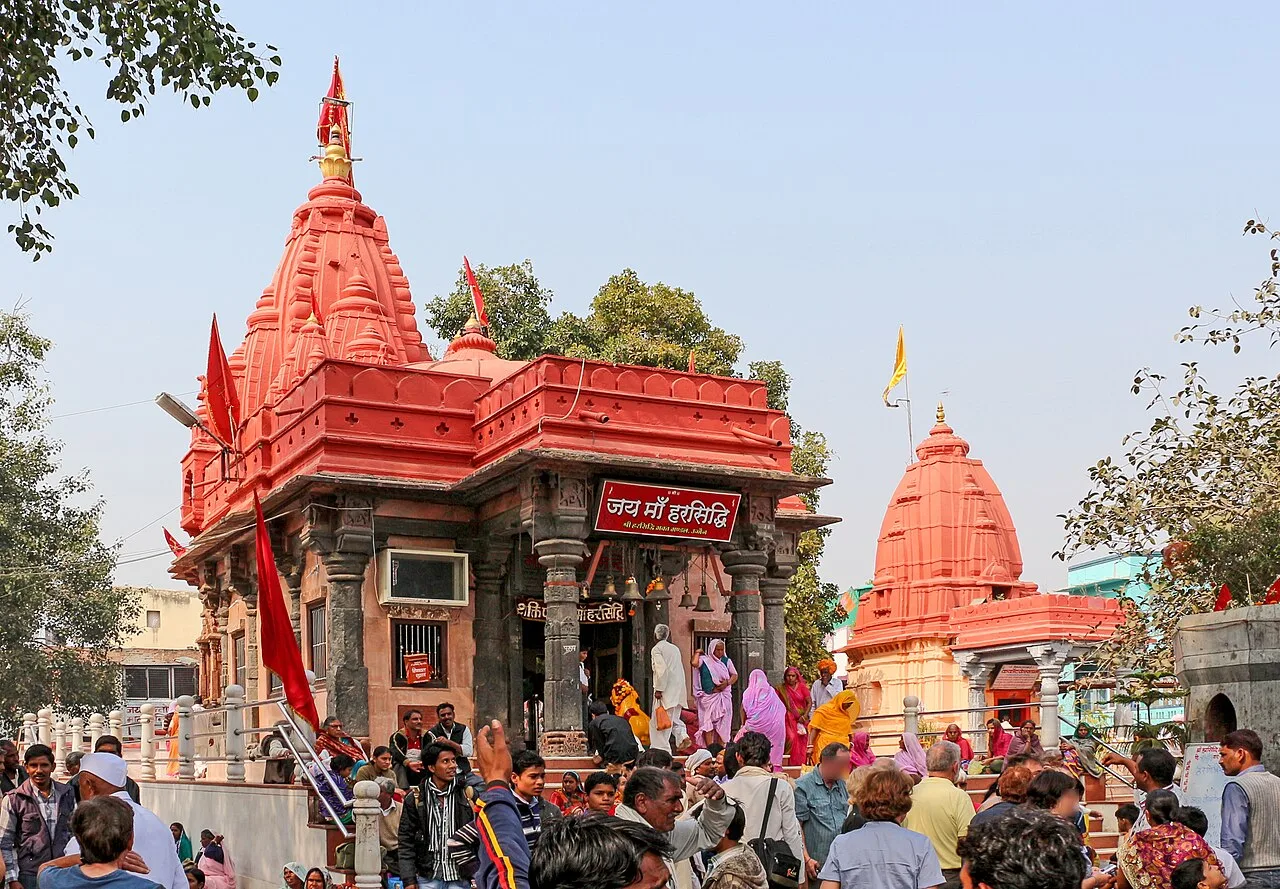
Harsiddhi Mata proudly stands at the heart of this corridor as one of Ujjain’s most prominent goddess shrines. Historically, the temple is strongly associated with the revered Shakti Peeth tradition and carries the cultural memory of King Vikramaditya, which provides it with a royal and historical depth in the city’s devotional imagination. Furthermore, its two massive deepstambhas (lamp pillars) remain the feature most visitors remember, especially when the lamps are fully illuminated in the evening. Therefore, the temple functions both as an active shrine and a breathtaking visual spectacle.
The Ritual Impact of the Deepstambhas
Interestingly, these deepstambhas are not mere architectural decorations. They actively define the identity of the temple courtyard and generate a powerful ritual atmosphere after sunset. Historical sources describe the pillars as holding more than a thousand lamps in total, with the evening lighting ceremony becoming one of the most iconic features of the shrine. For many visitors, this luminous display marks the moment when Harsiddhi feels most alive, proving that the temple’s power relies just as much on light and rhythm as it does on physical architecture. Moreover, Harsiddhi is fundamentally important because it acts as the primary Shakta anchor of the sacred corridor. While the Mahakal complex represents Shaiva centrality, Harsiddhi actively pulls the goddess tradition into the exact same sacred landscape. As a result, the Mahakal-Harsiddhi corridor becomes exceptionally rich from a religious-geography perspective.
Bade Ganeshji: Expanding the Sacred Route with Ganapatya Presence
Moving forward, Bade Ganeshji adds another fascinating layer to the Mahakal-Harsiddhi corridor and serves to remind us that Ujjain’s temple network is not limited strictly to Shiva and the goddess. In fact, it ranks as one of the most important Ganesha shrines in the Mahakal zone and is frequently included in local sacred circuits. The shrine holds special significance because it broadens the route into Ganapatya devotion, thus granting pilgrims a more holistic spiritual journey.
Additionally, popular accounts traditionally describe the shrine’s physical composition in unique material terms—citing elements like brick, lime, jaggery, and limestone—though that specific claim always benefits from ongoing field verification. Even so, the local importance of Bade Ganeshji remains undeniable. It stands firmly as a major devotional waypoint within the corridor, often visited directly in tandem with Mahakal and Harsiddhi.
Consequently, Bade Ganeshji demonstrates perfectly how the pilgrimage route avoids being dominated by one single tradition. Instead, it successfully accommodates multiple sacred forms in close proximity, giving the corridor an organic, living feel.
Agastyeshwar Mahadev: A Crucial Shaiva Node in the Pilgrimage Belt
Tucked neatly behind Harsiddhi in the Santoshi Mata courtyard, Agastyeshwar Mahadev exists as a highly significant shrine intricately tied to the local memory of Sage Agastya. Notably, it is widely recognized as the very first shrine in the renowned 84 Mahadev circuit of Ujjain, a status that grants it immense ritual weight. Because of this, the shrine serves not only as a quiet place of worship but also as a critical marker of sacred sequence within the Mahakal-Harsiddhi corridor.
The Overlap of Divine and Ascetic History
The specific legend attached to this shrine is profoundly meaningful. Local traditions assert that Sage Agastya arrived here to perform penance, resulting in the site becoming forever associated with his release from sin through Shiva’s divine grace. Such narratives are typical of Ujjain's older Shaiva sacred geography, where a location functions as a crossroads for divine intervention and ascetic history. Furthermore, Agastyeshwar is an excellent tool for mapping the corridor. Its physical placement near Harsiddhi—yet distinctively belonging to the Shaiva domain—beautifully illustrates how devotional traditions overlap in Ujjain rather than isolating themselves.
Ramanuj Kot and Sri Venkateshwar: The Vaishnava Transition Zone
As travelers progress further down the Mahakal-Harsiddhi corridor, Ramanuj Kot introduces an entirely different kind of sacred presence. Specifically, it represents the Sri Vaishnava side of the religious landscape, highlighting how the pilgrimage belt shifts gracefully away from the core Shaiva-Shakta epicenters. A directory source explicitly places it a mere 300 meters from the Harsiddhi Mata Temple, effectively proving that the Vaishnava layer rests right on the edge of the goddess shrine. This detail is far more than a simple navigational note. Ultimately, Ramanuj Kot signifies the vibrant existence of a separate devotional culture operating within the same urban stretch. In practical terms, it marks the exact geographic point where a distinct Vaishnava identity takes root on the route.
Completing the Route at Sri Venkateshwar
Sri Venkateshwar ultimately completes the Vaishnava side of the corridor, providing the route with a definitive devotional endpoint. Even though precise boundary markers can always use further field confirmation, the overarching pattern remains clear: pilgrims physically transition from Mahakal and Harsiddhi into an environment where Sri Vaishnava identity commands the space.
Why This Layered Sacred Geography Matters
The true value of the Mahakal-Harsiddhi corridor lies in its ability to seamlessly compress several vast religious worlds into one concise, walkable route. Visitors can vividly experience Shaiva, Shakta, Ganapatya, and Sri Vaishnava traditions without ever leaving the neighborhood. For structural planning and research, this dense sacred map reveals that Ujjain’s religious identity is built through physical movement, sequential discovery, and overlapping devotion.
FAQ: Mahakal-Harsiddhi Corridor
What is the Mahakal-Harsiddhi corridor?
It is the highly concentrated sacred geographic belt connecting the Mahakal area with Harsiddhi and the nearby Vaishnava shrines, allowing pilgrims to experience multiple devotional traditions in one walkable route.
Why is Harsiddhi Mata important to this route?
Harsiddhi Mata acts as the Shakta anchor of the corridor. It is a major Shakti Peeth shrine strongly associated with King Vikramaditya and is famous for its towering twin deepstambhas (lamp pillars).
Where is Agastyeshwar Mahadev located?
The shrine is located directly behind Harsiddhi Mata, inside the Santoshi Mata courtyard, and serves as the first designated stop in the traditional 84 Mahadev yatra.
What does Ramanuj Kot represent in Ujjain?
Ramanuj Kot represents the transition into the Sri Vaishnava devotional presence, showing how multiple religious sects coexist closely within the Mahakal-Harsiddhi sacred belt.
